
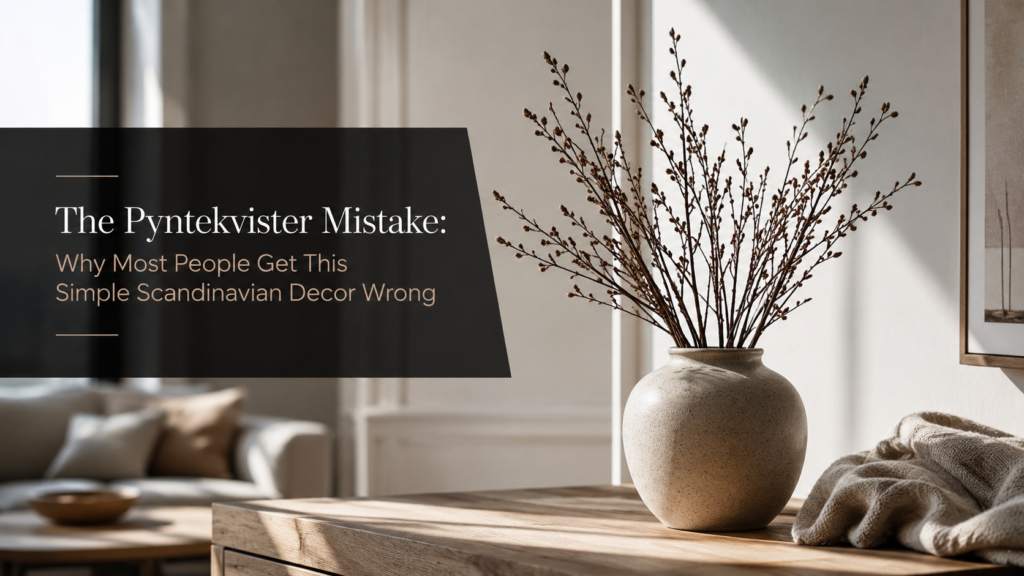

I learned the hard way that bringing home a few branches and sticking them in a vase isn’t actually pyntekvister. And honestly, it took me three failed arrangements to figure out why.
What I used to do: grab some branches, shove them in any vase, call it a day. What I do now: actually follow the principles I’ve learned, and the difference is visible.
What Most People Get Wrong
Most guides tell you pyntekvister means “decorative branches” and leave you with generic advice like “choose branches you like” or “put them in a vase.” That’s like saying “cooking is putting food in a pan.” Technically true. Completely unhelpful.
Here’s what I’ve learned from my own mistakes and testing over the past few years:
The most common mistake is overcrowding. I filled a vase with as many birch branches as it could hold—thinking more meant better. The result looked like a bundle of sticks, not an intentional design element.
A second mistake is using mismatched branches. Mixing birch, willow, and cherry in a single vase without a plan creates visual noise. The branches compete instead of complement.
The third mistake is choosing the wrong vessel. A squat bowl can’t handle tall branches. A narrow vase can’t support a wide arrangement. I learned this through arrangements that constantly tipped over.
What Pyntekvister Actually Means
The word comes from Norwegian—”pynte” (to decorate) and “kvister” (twigs or branches). But the literal translation misses the cultural context.
In Nordic countries, pyntekvister was never about decoration for decoration’s sake. During long winters, families brought branches indoors to stay connected to the outdoors. A branch in a window wasn’t just pretty—it was a quiet act of intention.
The practice has evolved but the core principle stays the same: bringing nature inside to create calm, not clutter.
How I Finally Got It Right
Here’s the process that actually works:
1. Choose one branch type
Pick birch for clean Scandinavian aesthetics. Willow for movement and curve. Hazel for sculptural shape. Cherry or apple blossom in spring for a softer look.
Stick to one type per arrangement. Mixing them creates competition, not complement.
2. Clean and dry everything
I once put fresh branches directly in water and ignored them for weeks. Mold developed. The branches turned brown and brittle. Now I let branches dry completely for at least a week before arranging.
Remove loose leaves and dirt. If you’re using fresh branches in water, change the water weekly. Otherwise, keep them dry.
3. Use odd numbers
Three branches in a cluster looks intentional. Two looks underdecided. Five creates natural asymmetry the eye reads as organic. This is one of the most reliable principles in Scandinavian design.
4. Choose the right vessel
A tall branch needs a heavy vase that won’t tip. I use ceramic for stability and visual weight. For shorter branches, a wide-mouthed glass container shows the stems beneath the waterline.
The vessel should complement the branch, not compete with it.
5. Leave negative space
This was hardest for me. The urge to fill the vase is strong. Resist it. Empty space is part of the design. The arrangement should breathe.
What Happened When I Tested This
I set up two arrangements side by side in my living room—my old method versus the approach above. One was crowded and chaotic. The other had three birch branches in a ceramic vase with intentional spacing.
The difference was immediate. The intentional arrangement created structure and calm. The crowded one looked messy and accidental.
People noticed. Four friends visited and three commented on the “good” arrangement. None mentioned the crowded one.
This aligns with biophilic design research. Studies show nature-inspired spaces reduce stress by around 20%. Pyntekvister delivers that benefit with almost no maintenance compared to houseplants or fresh flowers.
Seasonal Rotation
One benefit I didn’t expect: pyntekvister keeps my space connected to the seasonal cycle in a way artificial decor never could.
-
Spring: blossoming cherry branches bring renewal and light
-
Summer: taller willow arrangements with dried wildflowers
-
Autumn: russet-toned oak or maple branches
-
Winter: bare birch against a pale wall, perhaps with small lights
Dried branches kept away from direct sunlight can last several years. This makes pyntekvister more sustainable and cost-effective than flowers you replace weekly.
What You Actually Need to Start
-
One branch type (birch, willow, or hazel to start)
-
A vase or vessel that fits your branch height
-
Scissors or pruners for trimming
-
A place near a window or in a quiet corner
Cost: branches are free if you forage responsibly. Store-bought options from IKEA, florists, or markets are generally under $20. One arrangement has lasted me over two years with basic care.
A quick sourcing note: Always get permission before taking branches from private land. Look for fallen branches after storms. Don’t damage living trees.
Key Takeaways
-
One branch type per arrangement—mixing visuals creates clutter
-
Odd numbers—three or five branches feel intentional, two looks like an afterthought
-
The vessel matters—heavy ceramic for tall branches, glass for short
-
Leave negative space—empty space is part of the design
-
Seasonal rotation keeps it fresh—dried branches last years with basic care
FAQ
What is pyntekvister?
Pyntekvister is a Norwegian term for decorative twigs or ornamental branches used as interior decor. It combines “pynte” (to decorate) and “kvister” (twigs) and reflects a centuries-old Scandinavian practice of bringing natural elements indoors.
Which branches work best?
Birch for minimalist interiors, willow for curved, flowing arrangements, hazel for sculptural displays, and cherry or apple blossom for spring. Stick to one type per arrangement.
How long do pyntekvister arrangements last?
Dried branches kept away from direct sunlight and moisture can last several years. Fresh branches in water last one to two weeks and can then be kept as dried versions.
Is pyntekvister expensive?
No. Many people collect fallen branches for free. Affordable options are available seasonally at IKEA and year-round at florists.
Do I need crafting experience to make this work?
No. That’s the appeal. You pick a branch, choose a vessel, and the room responds. The process is intuitive once you follow the basic principles above.
Can I use pyntekvister in a small apartment?
Absolutely. One tall branch in a slim vase can transform a small corner without taking floor or shelf space. Focus on quality over quantity.